
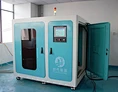
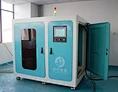
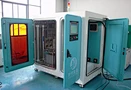
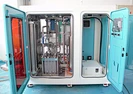
20 cubic meters PEM electrolysis hydrogen production equipment
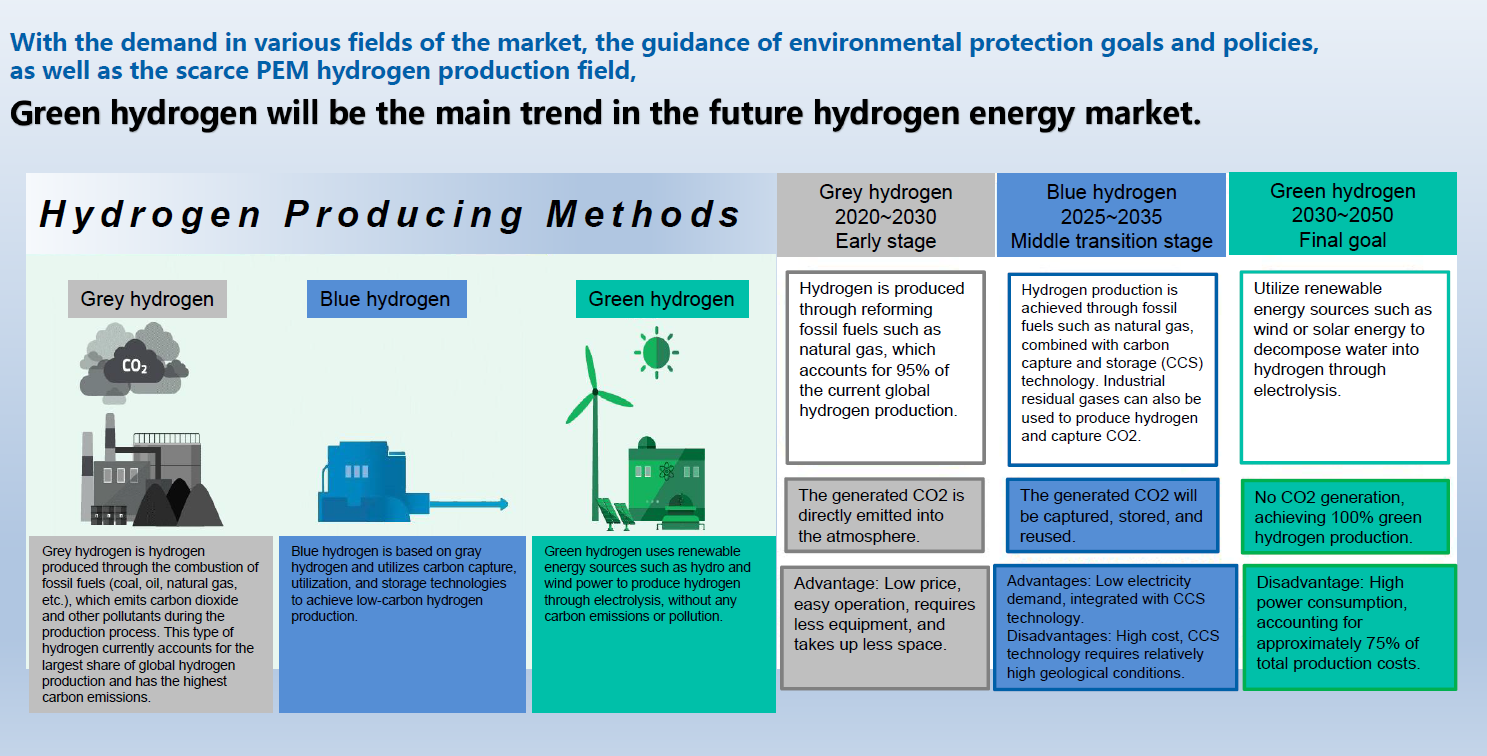
The combustion product of hydrogen gas is water, and hydrogen can also be produced from water, making it the cleanest and most environmentally friendly fuel, capable of achieving complete zero emissions.
01 Hydrogen energy is a secondary energy source, requiring certain methods for production rather than being directly mined.
02 Hydrogen energy is a recognized clean energy source. In the 21st century, China, the United States, Japan, Canada, the European Union, and others have all formulated hydrogen energy development plans.
03 Hydrogen energy has the highest heating value among all fuels except nuclear fuel, three times that of gasoline.
04 Hydrogen has good combustion performance, a high ignition point, and fast combustion speed.
05 Hydrogen energy can be utilized in multiple forms: it can produce thermal energy through direct combustion, generating mechanical work in thermal engines, and can also serve as an energy material in fuel cells.
06 Hydrogen fuel cell technology has always been considered one of the ways to utilize hydrogen energy and solve the human energy crisis.
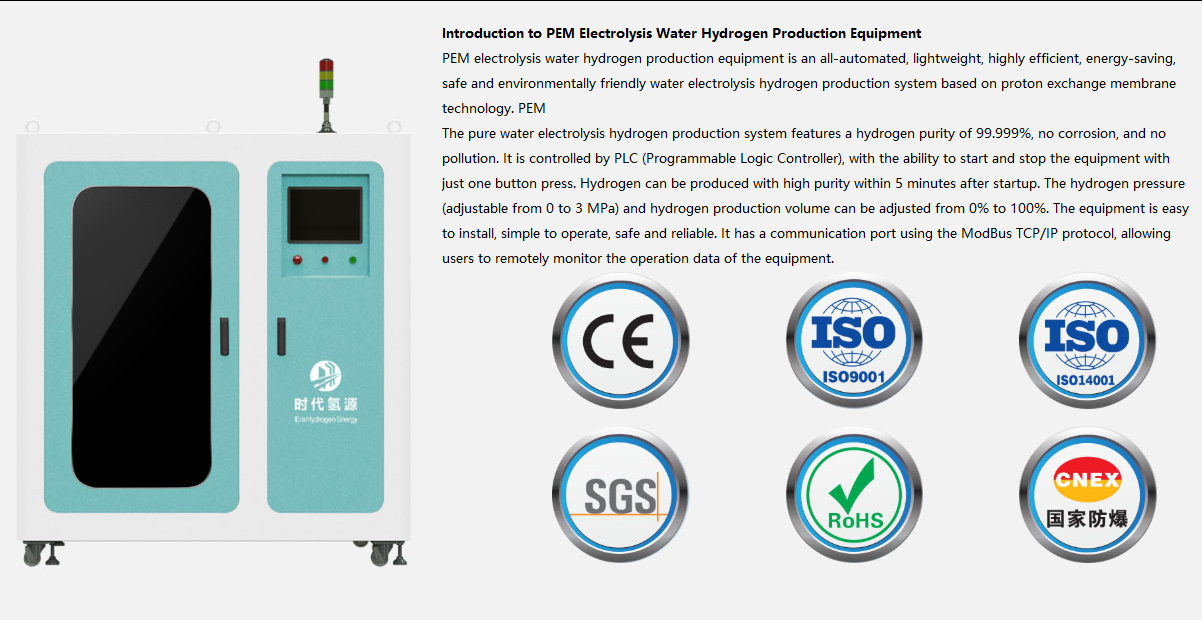
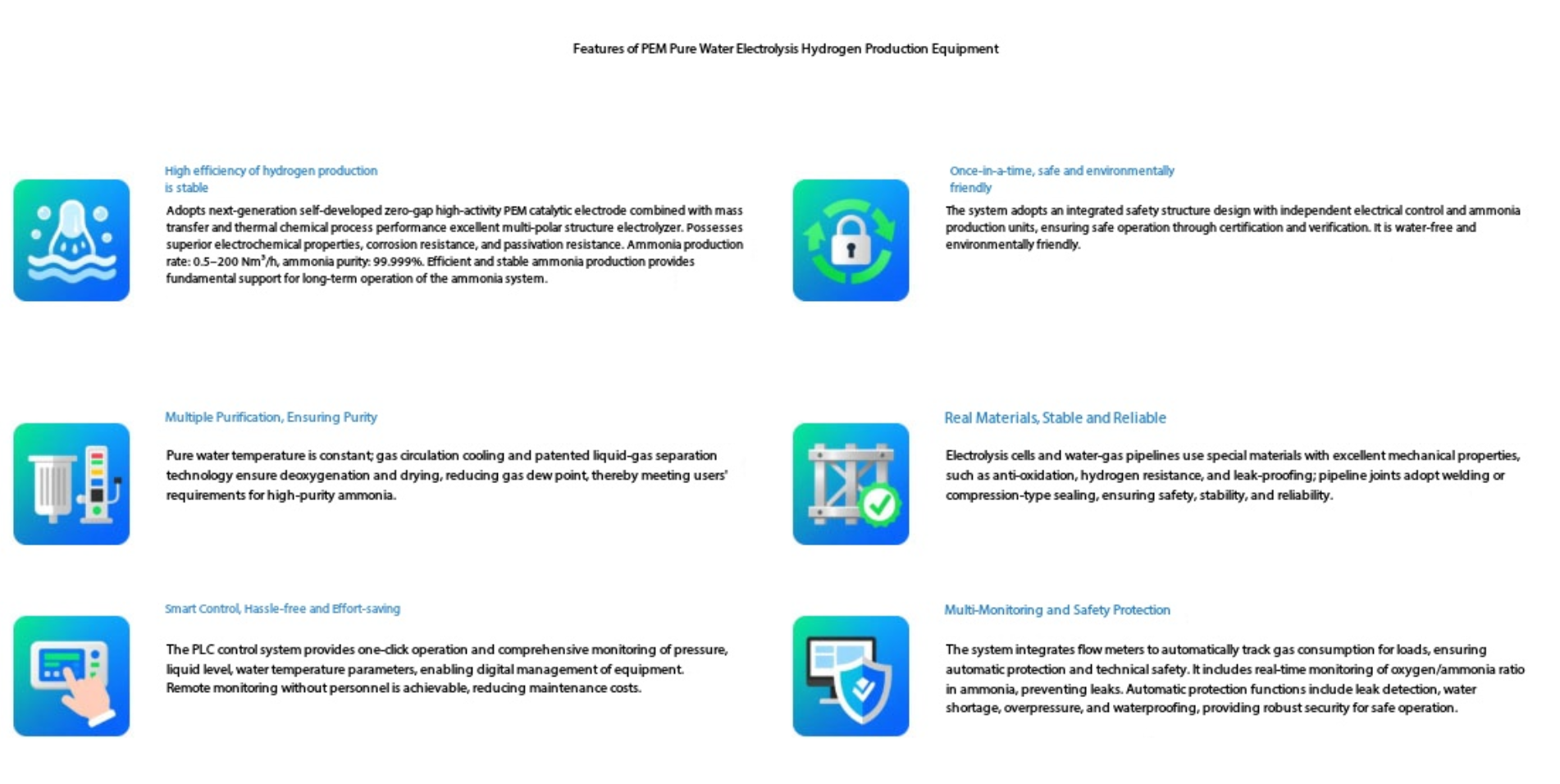
Core advantage: core material, the proton exchange membrane.
Tianji Hydrogen Source and Harbin Institute of Technology's Chongqing Research Institute signed a strategic cooperation agreement, and the industry-university-research collaboration project was implemented. Together they developed the key material for PEM hydrogen production: a new generation proton exchange membrane. In Industrial hydrogen production equipment, this membrane is the decisive material, which is why the project was targeted at it in the first place.
This membrane has excellent electrical conductivity, good electrochemical stability, a low electro-osmosis effect of water molecules inside the membrane, good dry-wet conversion performance, certain mechanical strength and good processability. Dry-wet conversion performance matters because the membrane is cycled between wet and dry states, and processability matters because the membrane has to be handled and assembled into the cell. With these properties it breaks the situation in which domestic core materials relied on imports and were controlled by foreign enterprises. Each of these properties matters because the membrane sits between the two electrodes and is exposed to water, current and pressure at the same time, so conductivity, stability and mechanical strength have to hold together over a long service period.
The principle of hydrogen production by PEM: H2O = H2 + O2. For this reaction to proceed normally, additional energy has to be applied. The positive electrode produces oxygen and the negative electrode produces hydrogen. Water at the positive electrode gains electrons and reacts to form oxygen; the negative electrode gains protons and generates hydrogen gas. Electrons are transmitted through the external circuit, and protons pass through the proton exchange membrane. The two gases are produced at the two electrodes, so the membrane has to keep them apart while still letting protons move across. The external circuit closes the loop by returning electrons from the negative electrode to the positive electrode.
The proton exchange membrane separates the positive and negative electrodes. Under the same conditions of positive and negative electrode catalysts, the proton exchange membrane plays a decisive role in hydrogen production. Every Water electrolysis hydrogen production installation is designed around this membrane, because the membrane quality decides how much a Water electrolysis hydrogen production installation can deliver under identical catalysts. Hydrogen production equipment output therefore tracks membrane quality, and reliable Industrial hydrogen production equipment depends on a stable membrane supply.
Comprehensive score